The Sous-Chef in Your Cloud: How AI is Revolutionizing Home Cooking in 2026
Step into the future of food. From thermal-imaging ovens to zero-waste pantries, discover how AI cooking assistants are transforming 2026 kitchens into smart, sustainable culinary studios.
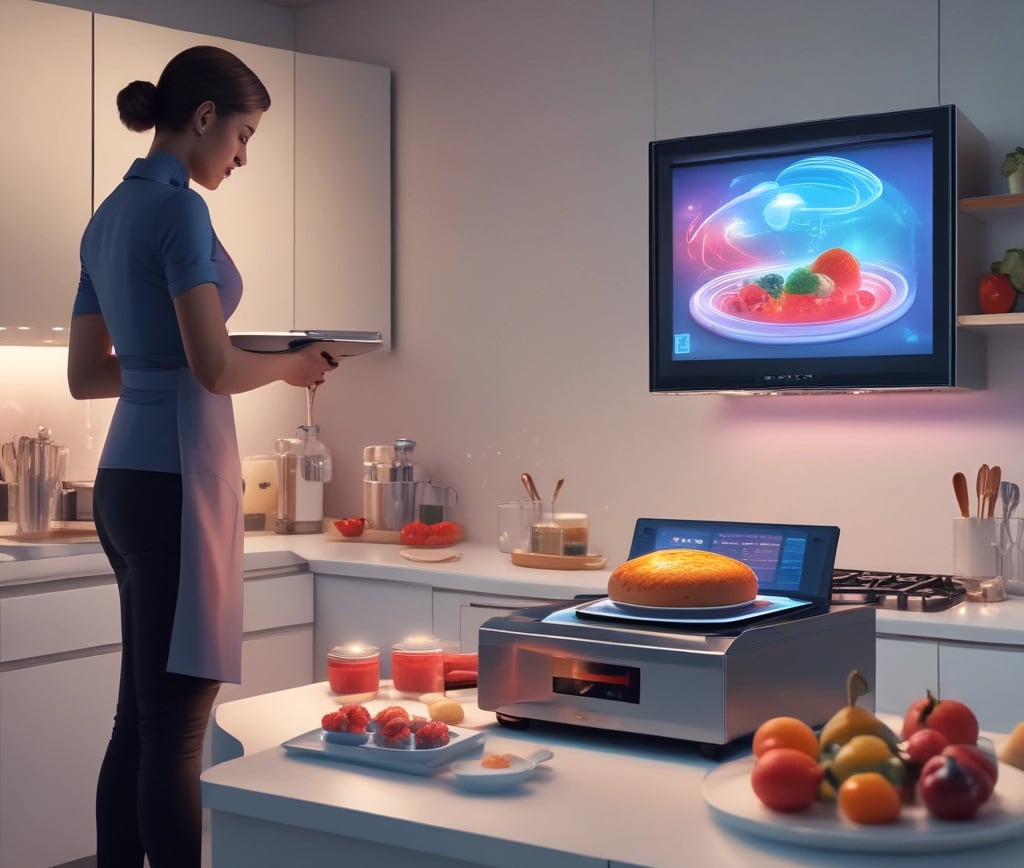
Step into the future of food. From thermal-imaging ovens to zero-waste pantries, discover how AI cooking assistants are transforming 2026 kitchens into smart, sustainable culinary studios.
Introduction
Picture this: It’s 6:00 PM on a Tuesday. You’re tired, your fridge contains a random assortment of leftovers—half a bell pepper, some Greek yogurt, and a lonely chicken breast—and your brain is too fried to invent a meal. In the past, this was the moment you ordered takeout. But in 2026, you simply ask your kitchen, "What can we make with this?"
Welcome to the era of the AI Sous-Chef. We have moved far beyond simple recipe apps. Today’s smart kitchens are powered by thermal imaging, predictive inventory management, and generative AI that can taste, test, and teach. Whether you are a culinary novice or a seasoned foodie, artificial intelligence has quietly become the most essential appliance in the room, promising not just convenience, but a complete reimagining of how we nourish ourselves.
In this article, we’ll explore the cutting-edge trends defining 2026, from appliances that watch your food cook to the rise of "co-botting" that brings Michelin-star techniques into your humble abode.
The Eyes and Ears of the Kitchen
The biggest leap in 2026 technology is sensory awareness. Appliances are no longer blind boxes that get hot; they now have "eyes."
Thermal Intelligence
Innovations like the Cube-O1 by Cue Chef have introduced thermal imaging to the masses. These devices don't just set a timer; they watch the heat distribution on your steak in real-time. If the pan is too hot, the AI adjusts the burner instantly. If your soufflé is rising too fast, the oven modifies the convection fan. This effectively eliminates the guesswork of "is it done yet?", ensuring professional-grade precision for every meal.
The "Co-Botting" Revolution
The concept of "co-botting"—collaborative robotics—has moved from factory floors to kitchen counters. Platforms like CloudChef act as the "nervous system" of your kitchen. They don't just tell you a recipe; they can digitally transmit the exact intuition of a master chef. Imagine an AI that guides your hand, telling you exactly when the sauce has reached the perfect viscosity or controlling your smart appliances to replicate the techniques of a Michelin-starred chef in Idaho.
Solving the "What's for Dinner?" Dilemma
Decision fatigue is real, but AI has finally solved the eternal question of meal planning by integrating pantry management with creativity.
Zero-Waste Wizardry
Sustainability is a major focus for 2026. Smart pantries now track your inventory automatically. Before your spinach wilts, your AI assistant flags it and generates a recipe specifically to use it up. Tools like Samsung’s Food AI monitor your fridge, dietary restrictions, and even the local weather to suggest the perfect comfort food for a rainy day.
Generative Recipes
We are no longer bound by static cookbooks. AI tools now function like Bakespace, allowing you to "fork" any recipe instantly. Want to turn a grandmother's handwritten, gluten-heavy lasagna recipe into a vegan, gluten-free version? The AI rewrites the chemistry of the dish in seconds, suggesting precise substitutions that maintain flavor and texture, rather than just swapping ingredients blindly.
The Rise of Smart Health and Customization
In 2026, "healthy eating" is hyper-personalized. AI doesn't just count calories; it engineers nutrition.
Macro-Tracking on Autopilot
Devices like the Upliance 2.0 have made tracking macros invisible. You don't need to weigh ingredients or log data into an app. The smart cooker knows exactly what you added and calculates the protein, fiber, and sugar content of your final dish automatically. It can even suggest "healthy swaps" in real-time—like reducing oil or adding flax seeds—without compromising the taste.
The Fermentation Renaissance
A surprising trend in 2026 is the high-tech return to ancient preservation. With gut health remaining a priority, AI-controlled fermentation stations are helping home cooks safely make kimchi, kombucha, and sourdough. The AI monitors pH levels and fermentation activity, ensuring you get the probiotic benefits without the risk of spoilage.
FAQ Section
Q: Do I need to buy all new appliances to use AI?
A: Not necessarily. While smart ovens and fridges offer the most seamless experience, many AI features are available through stand-alone devices (like smart thermometers) or sophisticated apps that pair with standard kitchen tools.
Q: Can AI really replicate a human chef's taste?
A: It's getting close. While AI can't "taste" in the biological sense, it uses vast datasets of flavor pairings and chemical interactions to predict deliciousness with high accuracy. However, the final seasoning—the "soul" of the dish—still benefits from a human touch.
Q: Is this technology only for wealthy households?
A: As with all tech, it started expensive but is democratizing fast. In 2026, we are seeing affordable countertop "smart assistants" that bring high-level AI capabilities to average kitchens, similar to how air fryers became ubiquitous a few years prior.
Conclusion
The kitchen of 2026 isn't a sci-fi automated factory where robots do everything while you sit on the couch. Instead, it’s a space where technology removes the drudgery—the burning, the wasting, the deciding—to make room for the joy of cooking.
AI cooking assistants have become the ultimate confidence boosters. They allow a busy parent to whip up a nutritious, zero-waste meal in 20 minutes, or a novice baker to attempt a complex macaron without fear of failure. By blending thermal precision with generative creativity, AI hasn't replaced the cook; it has empowered them. So go ahead, ask your kitchen what's for dinner. The answer might just surprise you.