AI Bias: When Algorithms Become Unfair — and How to Fix Them
Discover how AI bias impacts hiring, policing, and credit scores. Learn why algorithms become unfair and explore the solutions to build ethical AI.
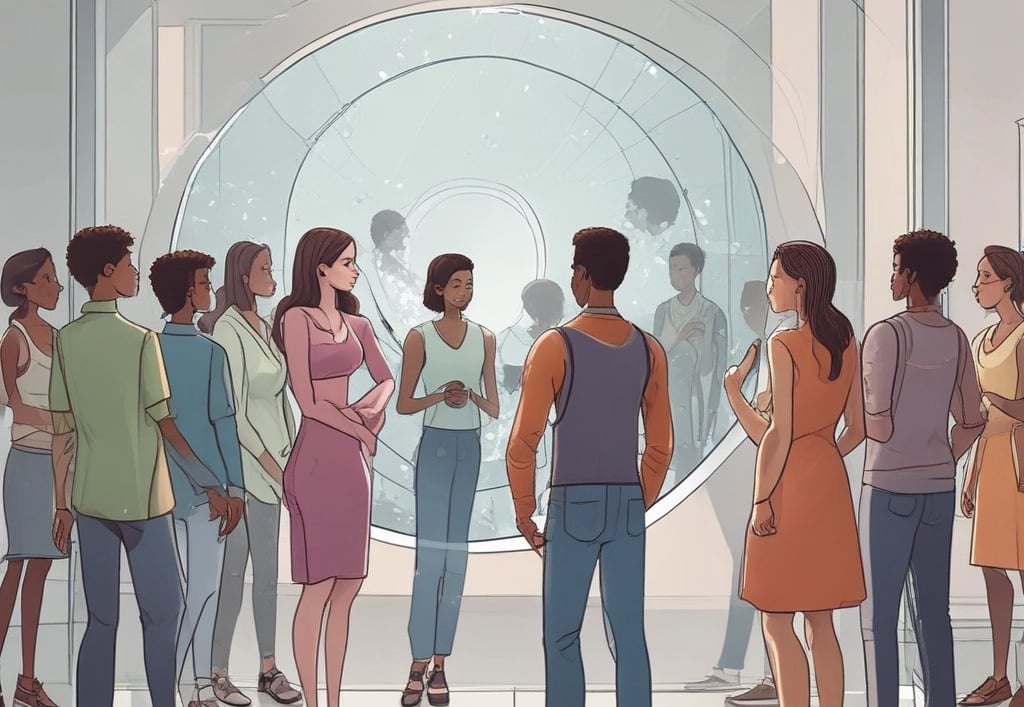
Discover how AI bias impacts hiring, policing, and credit scores. Learn why algorithms become unfair and explore the solutions to build ethical AI.
Introduction
We tend to think of Artificial Intelligence as a cold, purely logical machine—a Spock-like entity that makes decisions based on hard math, free from human emotion or prejudice. But the reality is messier. AI models are trained on data created by humans, and that data contains centuries of historical bias. When we teach a computer to "think" like us, we inadvertently teach it to discriminate like us.
This isn't a theoretical problem for the future. Right now, algorithms are deciding who gets a job interview, who gets a loan, and even who gets stopped by the police. When these systems fail, they don't just make math errors; they ruin lives.
In this article, we will break down exactly how AI bias infiltrates three critical sectors—hiring, policing, and finance—and explore the concrete steps engineers and policymakers are taking to scrub the "ghost in the machine" clean.
The "Black Box" of Prejudice
How does a machine become racist or sexist? Usually, it’s not because a programmer explicitly wrote a "be biased" line of code. It happens through proxy data.
An algorithm might be forbidden from looking at "race," but it notices that applicants from a certain zip code (which happens to be a minority neighborhood) tend to have lower approval rates historically. It then learns to penalize that zip code as a shortcut. This is the "Black Box" problem: the AI makes a decision based on complex correlations that even its creators might not fully understand until it’s too late.
Hiring: The Resume Filter Trap
In the corporate world, Applicant Tracking Systems (ATS) are the gatekeepers. They scan thousands of resumes to find the "best" candidates. But what does "best" look like?
If an AI is trained on the resumes of a company's past top performers—who happened to be mostly men—it might learn to downgrade resumes containing words like "women's chess club" or gaps for maternity leave. Amazon famously scrapped a recruiting tool because it taught itself that male candidates were preferable, penalizing graduates from all-women’s colleges. This creates a self-fulfilling prophecy: the AI hires more of the same, reinforcing the bias in the next batch of data.
Policing: The Feedback Loop of Surveillance
"Predictive policing" sounds like Minority Report, but in practice, it often looks like over-policing. Algorithms like COMPAS are used to predict which criminals are likely to re-offend, influencing bail and sentencing.
ProPublica found that COMPAS was nearly twice as likely to falsely flag Black defendants as high-risk compared to White defendants. Why? Because the data used to train it—arrest records—reflects where police go, not necessarily where all crime happens. If police patrol minority neighborhoods more heavily, they make more arrests there. The AI sees the arrest data and concludes, "This area is dangerous," sending more police there, who make more arrests. The algorithm doesn't predict crime; it predicts policing.
Credit & Money: The Hidden Redlining
In finance, your credit score is your passport. But "blind" algorithms can act as digital redliners.
A study by the Brookings Institution found that credit algorithms often use alternative data points—like shopping history or web browsing—that correlate with income and race. Even if race is removed, the AI might charge higher interest rates to people who shop at discount stores, disproportionately affecting lower-income minority groups. This can lock entire demographics out of homeownership, the primary driver of generational wealth, simply because they don't fit the statistical profile of a "standard" borrower from 1990.
How to Fix It: Diverse Data and "Glass Box" Ethics
The solution isn't to abandon AI, but to govern it. We need to move from "Black Box" AI (opaque) to "Glass Box" AI (explainable).
Algorithmic Audits: Just as companies have financial audits, they need independent auditors to test their code for disparate impact before it goes live.
Diverse Training Data: Engineers must actively curate datasets that over-sample underrepresented groups to ensure the model learns from a balanced view of the world.
Human-in-the-Loop: For high-stakes decisions like sentencing or hiring, AI should never be the final judge. It should only provide a recommendation that a human expert reviews.
FAQ
1. What is "proxy data"?
It’s seemingly neutral data (like zip code or university name) that correlates closely with protected characteristics like race or gender, allowing AI to discriminate indirectly.
2. Can we just remove "race" from the data?
No, that usually doesn't work because of proxy data. The AI finds other patterns that function as race.
3. What was the Amazon hiring scandal?
Amazon built an AI recruiting tool that penalized resumes containing the word "women's" (e.g., "women's soccer captain") because it was trained on 10 years of male-dominated resumes.
4. Is facial recognition biased?
Yes. Studies show many facial recognition systems have higher error rates for darker skin tones and women, leading to wrongful arrests.
5. What is "predictive policing"?
Using algorithms to analyze crime data and predict where crimes will happen or who will commit them. It is criticized for reinforcing racial profiling.
6. How does bias affect healthcare AI?
If an AI is trained mostly on data from white patients, it might fail to diagnose skin cancer on darker skin or miss symptoms that present differently in women.
7. What is an "algorithmic audit"?
A review process where experts test an AI system to see if it treats different demographic groups fairly before it is released.
8. Are there laws against AI bias?
The EU's AI Act and various US local laws are starting to regulate "high-risk" AI, requiring fairness testing and transparency.
9. Can AI ever be completely unbiased?
Likely not, because humans define "fairness" subjectively. But we can reduce harmful bias significantly.
10. What can I do as a user?
Demand transparency. If an algorithm denies you a loan or a job, ask for an explanation. Support companies that pledge ethical AI practices.
Conclusion
AI is a mirror reflecting our society. When we see bias in the machine, we are seeing a reflection of our own history. The "glitch" isn't in the code; it's in us.
But unlike history, code can be rewritten. By acknowledging that algorithms can be unfair, and by rigorously testing them for equity, we have a unique opportunity. We can build AI that doesn't just repeat the past, but actively helps us construct a fairer future.