Unlock the full power of AI with PromptSphere: expert-crafted prompts, tools, and training that help you think faster, create better, and turn every idea into a concrete result.
AI Agents vs. Traditional Chatbots: Key Differences
Explore the differences between traditional chatbots and AI agents. Learn how AI agents go beyond simple responses to execute tasks and achieve goals, revolutionizing chatbot technology.
2/20/20263 min read
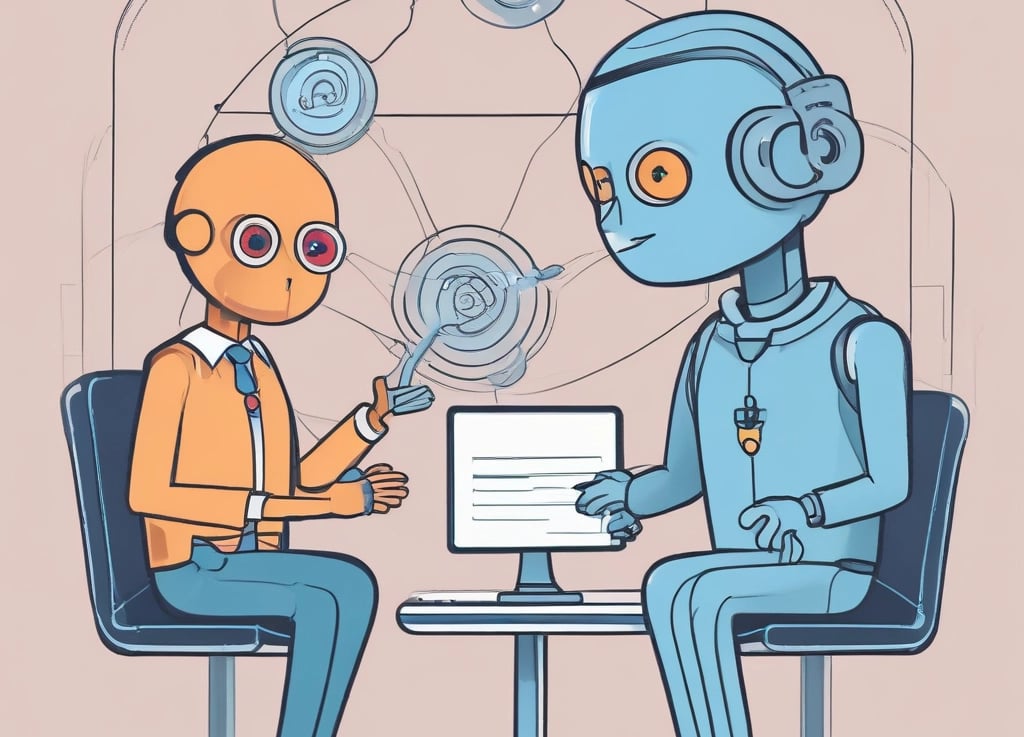
From Chatbot to Agent: Designing Prompts That Make AI Act, Not Just Answer
The Shift: From Reactive to Proactive AI
Traditional chatbots operate in a request-response loop: they answer questions but rarely initiate or execute tasks. AI agents, by contrast, are goal-oriented systems that:
Plan (break tasks into steps),
Act (interact with tools/APIs),
Adapt (handle uncertainties or constraints).
Key difference:
Chatbot
AI Agent
Passive (waits for input)
Active (pursues objectives)
Single-turn responses
Multi-step workflows
Limited context
Persistent memory/state
Core Components of Agentic Prompts
To design prompts that drive action, structure them around three pillars:
1. Task Planning: The "How"
Agents need explicit workflows. Instead of:
"Summarize this document."
Use:
"1. Extract key claims from Sections 2–4.
2. Cross-reference with the 2023 dataset (attached).
3. Generate a 3-bullet summary prioritizing contradictions."
Why it works:
Decomposes complexity into atomic steps.
Assigns tools/data (e.g., "use the web_search tool for Step 2").
Anticipates dependencies (e.g., "wait for API response before Step 3").
Pro tip: Use pseudo-code for technical agents:
# Agent workflow for customer refund IF (order_status == "delivered" AND request_date < 30_days_ago): INITIATE refund_api_call(payment_id) ELSE: SEND email_to="support@company.com" WITH template="refund_denied"
2. Constraints: The "Guardrails"
Agents without constraints either hallucinate or overreach. Define:
Scope:
"Only use data from Q3 2024. Ignore pre-June sources."
Ethics/Legality:
"Never store PII. If a user shares a credit card number, REDACT and alert security@company.com."
Resource limits:
"Max 3 API calls per task. If uncertain, ask for human review."
Example for a research agent:
*"Compile sources on quantum computing, but:
Exclude paywalled papers (use arxiv.org only).
Flag any study with <50 citations as ‘low confidence’.
Stop after 10 sources or 2 hours, whichever comes first."*
3. Success Criteria: The "Done" Definition
Vague goals ("improve this code") lead to vague outputs. Specify:
Quantitative metrics:
"Reduce the Python script’s runtime by 30% (current: 120ms)."
Qualitative standards:
"Rewrite this email to sound ‘warm but urgent’—target a 7th-grade reading level (use Hemingway Editor)."
Validation steps:
"After drafting the report, run plagiarism_check(tool='grammarly') and tone_analysis(target='professional')."
Template for success criteria:
*"This task is complete when:
[Output] meets [metric] (e.g., ‘CLS score > 0.85’).
[Stakeholder] approves via [method] (e.g., ‘Slack thumbs-up’).
[Safety check] passes (e.g., ‘no bias flags from fairlearn’)."*
Anti-Patterns to Avoid
Problem
Bad Prompt
Fixed Prompt
Overly broad
"Make this better."
"Shorten to 150 words while keeping the call-to-action in the first sentence."
Assumes tools
"Find the best hotel."
"Use booking_api to list 3+ star hotels in Paris under €150/night, sorted by review score."
No failure mode
"Write a tweet."
"Draft a tweet about the product launch. If >280 chars, prioritize the discount code over hashtags."
Real-World Example: E-Commerce Support Agent
Prompt:
*"Handle this customer complaint (attached). Follow this workflow:
Classify the issue (use sentiment_analysis tool). If sentiment < 0.3, escalate to Tier 2.
Check order status via order_lookup(order_id). If ‘shipped’, offer a 10% coupon; if ‘lost’, initiate replacement.
Draft a response in the brand voice (see tone_guide.md). Include:
Apology + empathy (‘I understand how frustrating this must be’).
Solution + timeline (‘Your replacement ships tomorrow’).
Proactive next step (‘I’ve credited your account €20 for the inconvenience’).
Constraints:
Never promise refunds >€50 without manager approval.
If resolution takes >24h, send an interim update.
Success:Customer replies ‘Resolved’ or rates the interaction ≥4/5."*
Why it works:
Planning: Clear steps with tool assignments.
Constraints: Financial/legal guardrails.
Success: Measurable (rating) + qualitative (customer confirmation).
Tools to Supercharge Agentic Prompts
Tool
Use Case
Prompt Integration
LangChain
Multi-step workflows
"use_retriever=vector_db" in Step 1
Zapier
API automation
"IFTTT_rule: ‘if email_label=‘urgent’, trigger Slack alert’"
Guardrails AI
Safety constraints
"validators: [‘no_toxicity’, ‘on_topic’]"
Key Takeaways
Agents need verbs: Replace "analyze" with "scrape → cluster → visualize."
Constraints liberate: Limits (time, tools, ethics) focus the agent’s creativity.
Define "done" upfront: Success criteria prevent infinite loops.
Iterate: Test prompts with edge cases (e.g., missing data, ambiguous asks).
Final thought: A chatbot answers; an agent accomplishes. The prompt is its mission brief—write it like one.